






Contact Information
-
MAILING : P.O. Box 8, Los Olivos, CA 93441
Midland Students Compete, and Place, in Countywide Architecture Challenge
For more than 35 years, the Santa Barbara County High School Architectural Design Competition has challenged students to think like architects — working quickly, creatively, and under pressure. Designed to mirror real-world architectural practice, the competition asks students to translate ideas into fully realized designs in a single day, often with little prior formal training.
This year, 64 students from across the county gathered for the annual Design Charrette.
Three were from Midland.
Winslow ’28 placed 3rd overall. Nico ’27 placed 6th.
Ryan ’27 also competed in the initial round, representing Midland alongside his peers.
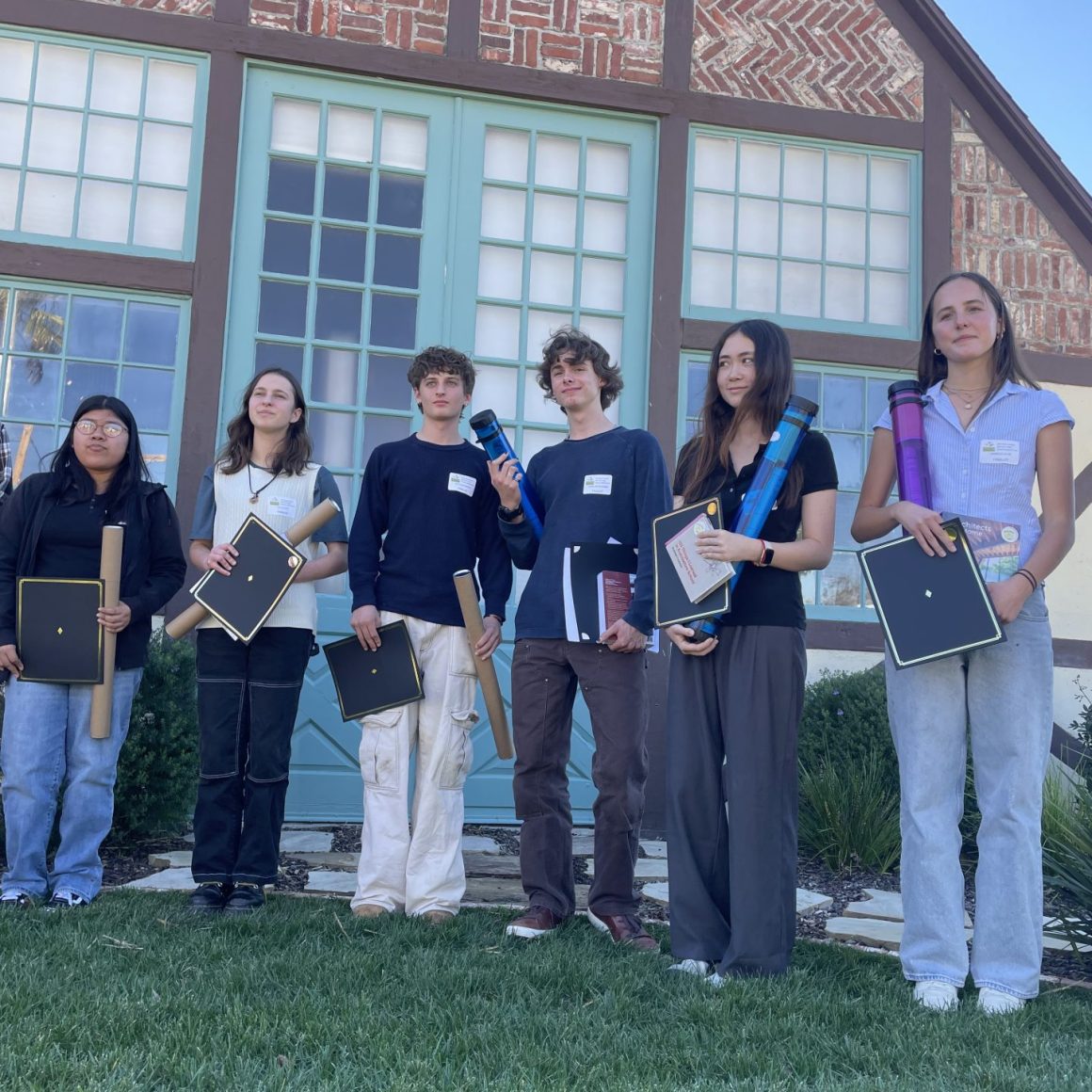
Nico ’27 (third from left) and Winslow ’28 (4th from left) pose with their awards next to the other top 6 competitors
Together, they brought Midland’s approach, thoughtful, grounded, and connected to place, into a highly competitive, real-world setting.
For Winslow, architecture began long before the competition.
“As a kid, I always liked making really tight, precise drawings,” he says. “That carried over when I came to Midland, just continuing to sketch and design in a consistent way.”
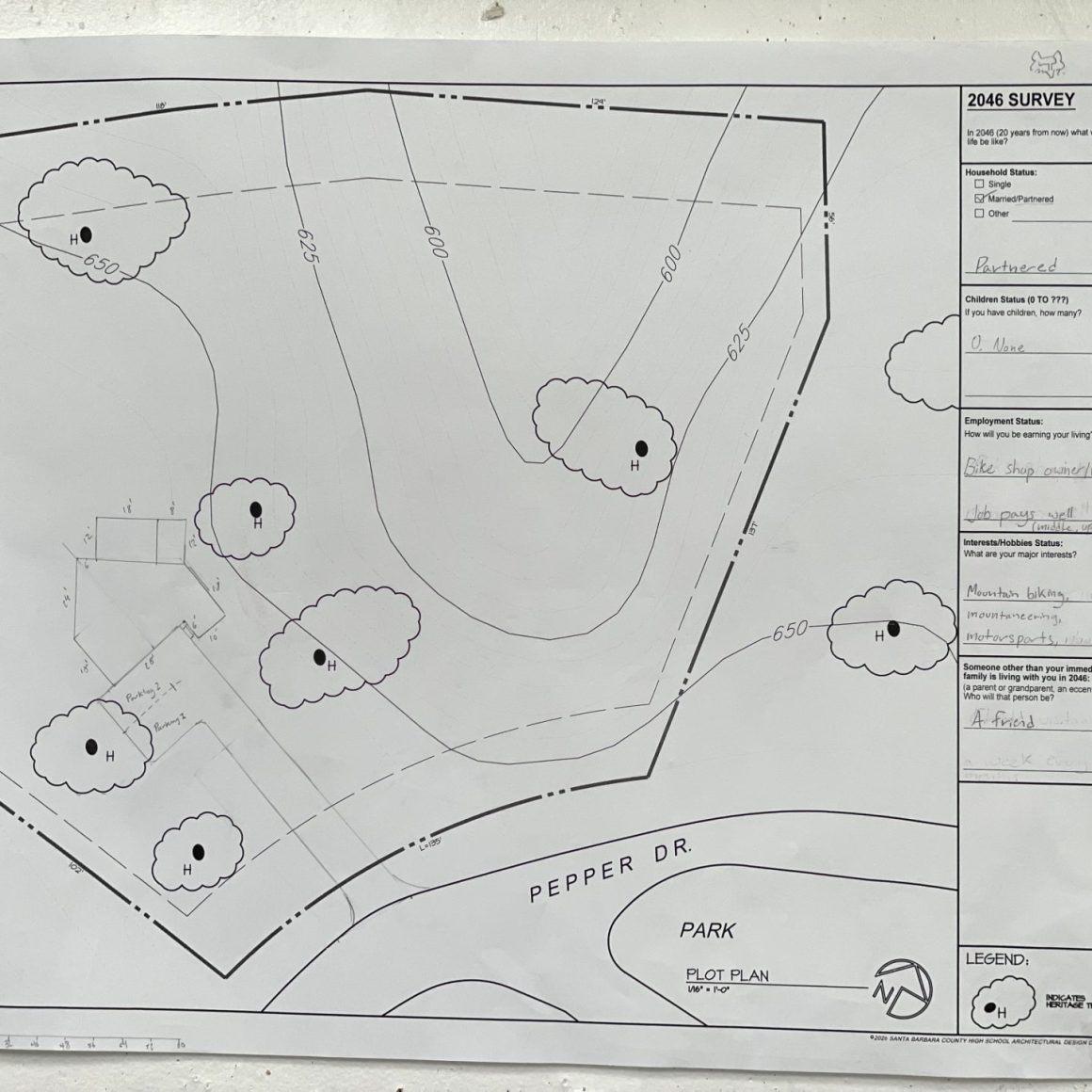
Part 1 of Winslow’s competition design
At Midland, that instinct found direction. Through Foundations and advanced visual arts coursework, Winslow learned how to translate ideas into architectural plans, working through elevations, floor plans, and models.
Those skills became essential when he faced this year’s open-ended prompt:
Design how you might live 40 years from now – with sustainability as the only constraint.
What excited him most was also what challenged him.
“It was how many options I had,” he says. “There wasn’t just one direction to follow – it was really open.”
Winslow approached the challenge methodically, beginning with structure before allowing space for creativity.
“I started by blocking out the garage and core spaces,” he explains. “Then I added the living areas keeping everything relatively compact so I could leave room for the landscape.”
That relationship between structure and environment became central to his design, a reflection of how Midland students learn to think about space not just as something to build on, but something to work with.
One feature stood out to him in particular:
“I really liked the bike shop I built into the house,” he says. “It’s integrated, not separate, and it can open to the outside.”
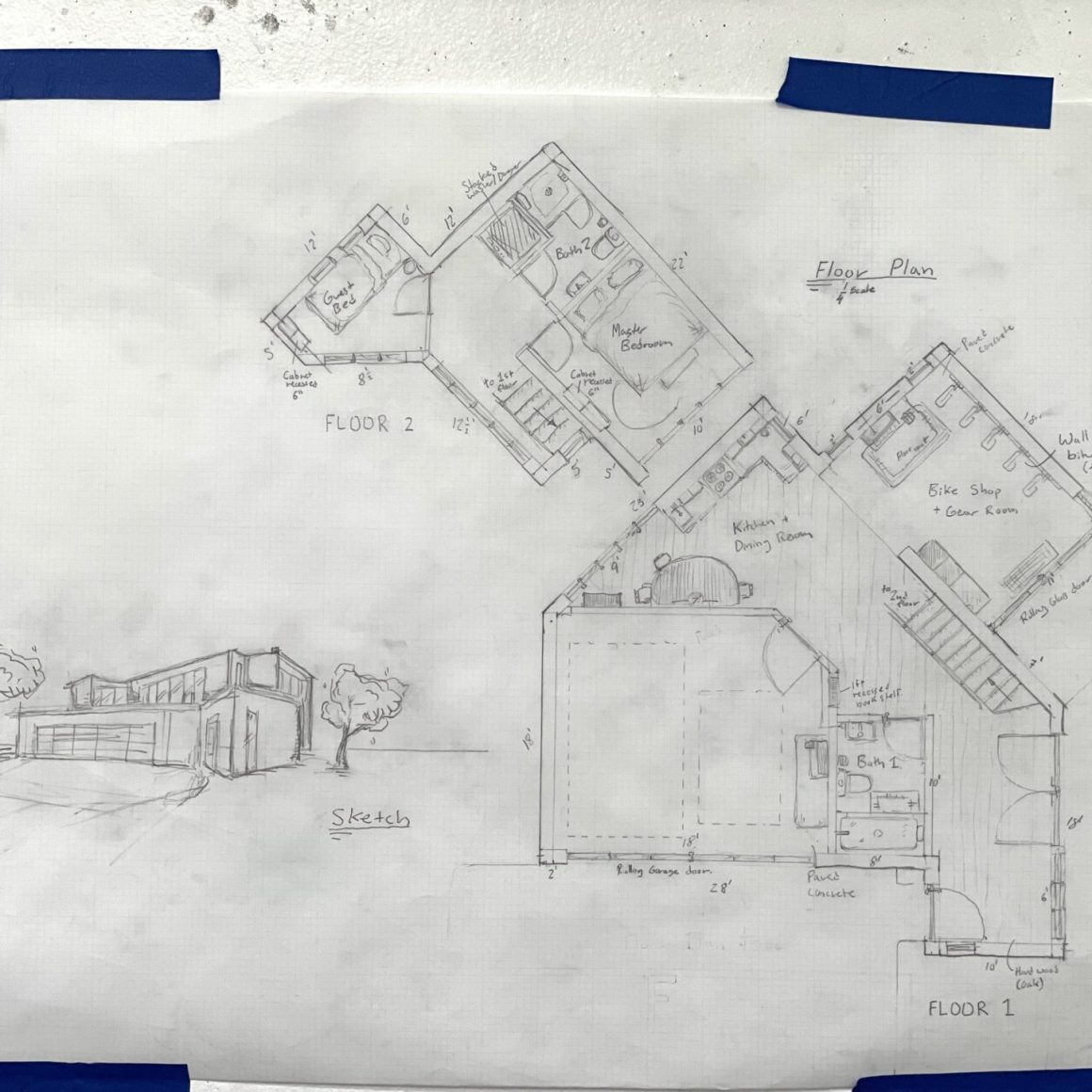
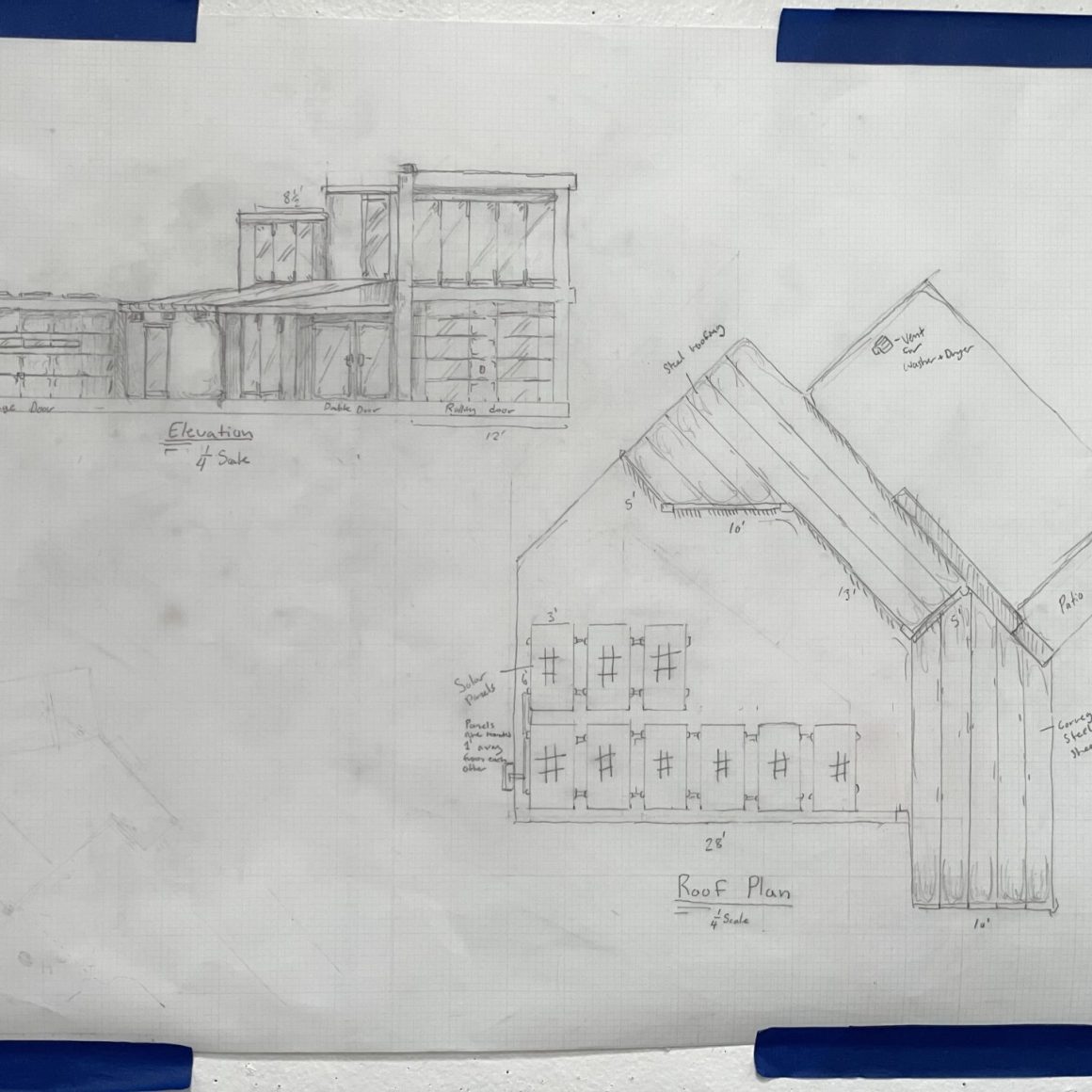
Winslow’s final competition design, centering practicality and sustainability
His design also reflected a philosophy that echoes Midland’s own:
“Just what you need – not what you want.”
The competition’s charrette format requires students to work independently, translating ideas into scaled drawings within a fixed timeframe.
At first, Winslow found the pace challenging.
“My process starts pretty slow,” he says. “Especially when I’m working with scale. I was worried I wouldn’t finish.”
But once he found his rhythm, everything shifted.
“After that, I just had everything in my head. I was able to move through it and finish right on time.”
That ability, to hold a concept, adapt, and execute under pressure, is exactly what the competition is designed to reveal.
Winslow credits Midland’s academic structure for preparing him to compete at this level.
“The Foundations class really helped,” he says. “Learning how to build models, create floor plans, and go through the full design process, that made a big difference.”
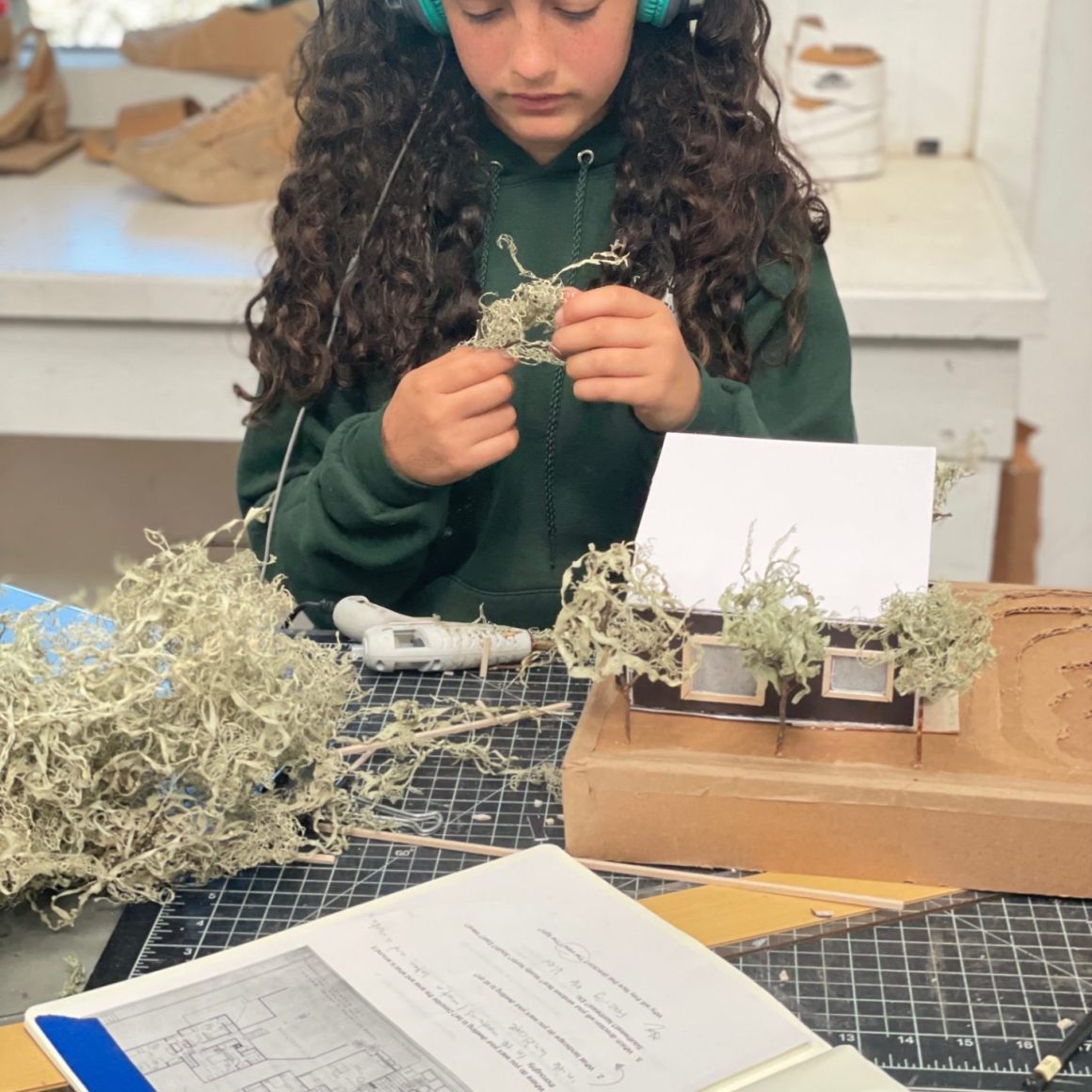
Peer Layla ’29 working on an Architecture project in Foundations Art class
Equally important was the time and autonomy to pursue creative work deeply.
“I have hours each week to just design and work on projects,” he says. “That freedom — to choose how I learn and how much time I spend really helped prepare me.”
Competing alongside 63 other students in a room filled with quiet focus and fluorescent light was an intense experience.
“It felt kind of isolating at first,” Winslow admits. “No one was talking. Everyone was just working.”
But it was also meaningful.
“It felt good to represent Midland,” he says. “Especially knowing it had been a long time since someone from Midland placed that high.”
When he learned he had advanced to the final round, he was surprised. When he placed third, he was stunned.
“I didn’t expect to get top 20, let alone third,” he says. “It was really shocking.”
Presenting his work to a jury of professional architects added another layer of growth.
“It helped a lot with public speaking,” he says. “Explaining my design and defending my choices – that was something new.”
Beyond the recognition, the experience reshaped how Winslow sees himself as a learner and designer.
He developed a stronger understanding of scale and spatial translation, learned to manage time under pressure, and gained confidence in presenting his ideas.
“I’m definitely more confident in my designs now,” he says. “And in speaking about them.”
Perhaps most importantly, he discovered something about his own creative process:
“I can come up with an idea really quickly,” he says. “And then it’s just about following through on what’s in my head.”
While Winslow is still exploring his future, the experience opened new possibilities.
“Architecture seems like a really interesting path,” he says. “This was a great starting point to see what that could look like.”
His advice to other Midland students is simple:
“Go for it. Even if you’re not sure, you might surprise yourself.”
For Winslow, the most meaningful part of the experience wasn’t the placement, it was the process.
“I just tried my best,” he says. “And I think I raised my own standard through it.”
That mindset reflects something essential about Midland.
Here, students are given both the structure and the freedom to explore, to test ideas, take risks, and apply what they’re learning in real-world contexts. Whether in the studio, on the land, or in a high-pressure design competition, the work is the same: thoughtful, intentional, and grounded in purpose.
And sometimes, as Winslow discovered, that work leads further than expected.
. . .
Reflection facilitated by Admissions Associate Jasmine Fullman
Excited to learn more about the Midland Experience?
Continue exploring the Midland experience