


Contact Information
-
MAILING : P.O. Box 8, Los Olivos, CA 93441
Mateo ’26 reflects on craftsmanship, hard work, and what Midland teaches beyond the classroom.
Spring 2026
When Mateo first imagined his senior project, the plan was considerably more ambitious than the kayak currently sitting in Midland’s woodshop.
Originally, he wanted to build enough canoes for Midland students to eventually take group canoe trips together through the outdoor program. It did not take long, however, for him to realize that building seven boats from scratch might be slightly unrealistic for a single semester.
“So I thought, ‘Why don’t I just build myself a little boat?’” he says, smiling. That “little boat” quickly became months of cutting, wiring, sanding, sealing, fiberglassing, troubleshooting, redesigning, and learning how to patiently work through mistakes one step at a time.
Now, after nearly a full semester of work, Mateo’s handcrafted kayak sits nearly complete — fiberglassed, sealed, slightly imperfect, and deeply meaningful to him. “It’s not even really about using it,” he says. “I think I’m probably going to look at it more than anything else and just admire what I’ve done.”
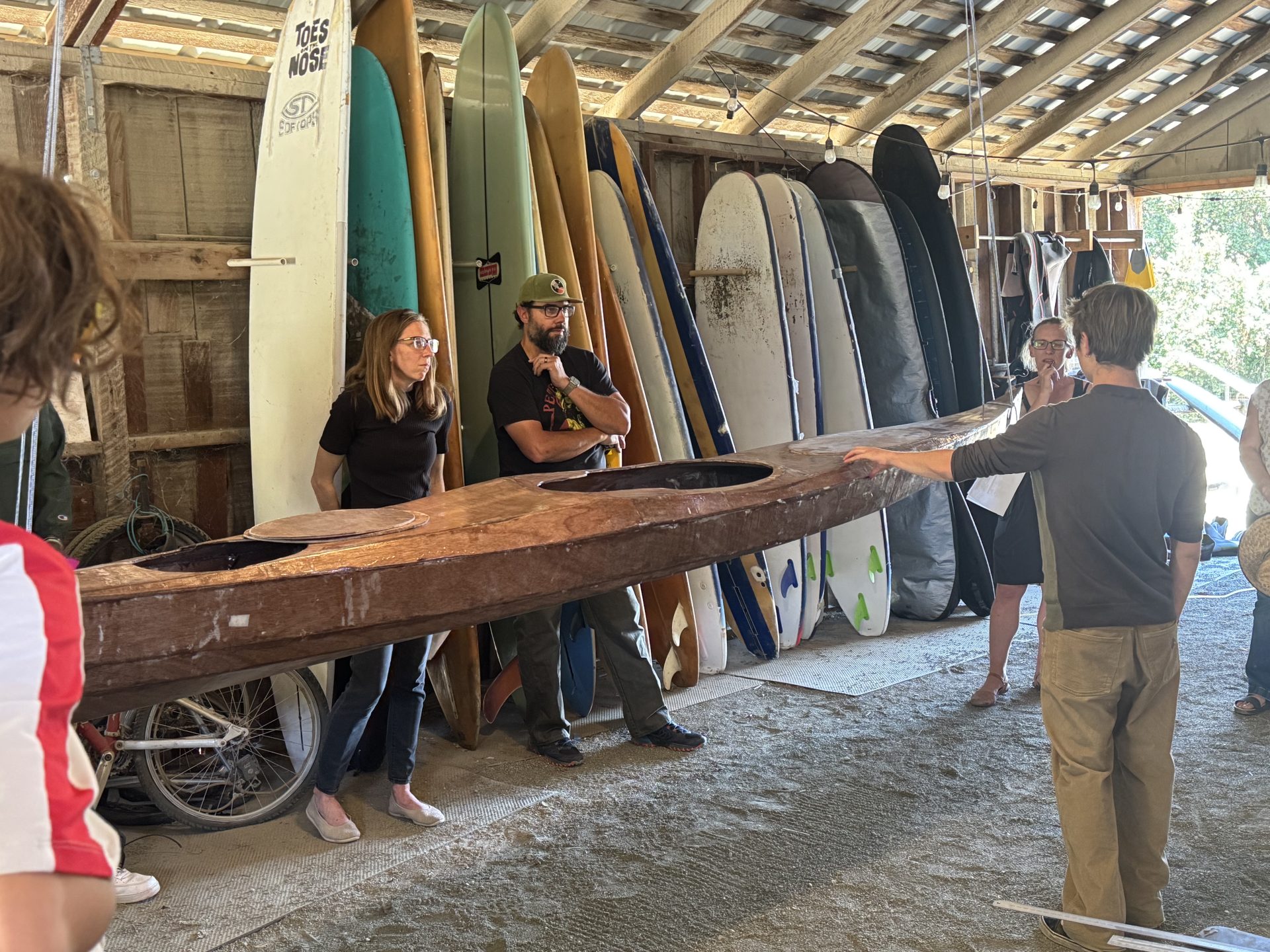 Unlike many senior projects that involve research papers or presentations, Mateo describes his experience as something much more physical and repetitive. “Most of the work was just doing the work,” he says. “Hours and hours of sanding, sealing, fiberglassing. It wasn’t always exciting, but it taught me a lot.”
 The challenges came quickly. Hand-cut pieces did not always line up perfectly. Small inaccuracies early in the process created larger complications later. At one point, the kayak became visibly lopsided, forcing Mateo to adapt as he went and accept that perfection was probably never going to happen. “You learn pretty quickly that if you rush things early on, you’ll pay for it later,” he says. “It’s better to just flow with the process instead of fighting it.”
That lesson: patience through repetition and persistence through frustration, became one of the deeper takeaways of the entire experience. “There were moments where I’d just get into this flow state,” he says. “I’d be sanding for hours, but eventually your mind quiets down and you settle into the work.”
The project itself would not have been possible without Midland’s open woodshop culture and the support of faculty members who regularly stopped by to offer advice, encouragement, or simply curiosity about what he was building.
Woodworking teacher Andrew Gardiner became an especially important resource throughout the process, even though he was not technically Mateo’s senior project advisor. “He always let me use the space, use the tools, ask questions, make mistakes,” Mateo says. “And honestly, he was very patient with the amount of mess I made.”
Other faculty members drifted through the workspace as well, offering practical advice, helping troubleshoot problems, or simply stopping to admire the project’s progress. “It was just really nice having adults around who genuinely cared enough to stop and help,” he says. That spirit of mentorship and shared work is something Mateo believes defines Midland far beyond the woodshop itself.
Earlier this spring, Mateo drafted a speech centered not on students, but on Midland teachers and the example they set every day through the way they live and work alongside students. “Midland teachers aren’t just teaching us how to be good students,” he says. “They’re teaching us how to be good human beings.”
As he worked on the kayak, he found himself thinking often about the lessons faculty had modeled over his four years at Midland – perseverance, responsibility, kindness, humility, and the ability to continue showing up even when things are difficult. “They taught me how to care about my work, my tools, my spaces,” he says. “And because of that, when I finally had a project I really cared about, I knew how to actually put myself fully into it.”
For Mateo, one of Midland’s most important lessons is not necessarily academic. “I think Midland teaches you how to live,” he says. “How to work with people you disagree with. How to think critically. How to be kind. How to put effort into things that matter.”
He pauses for a moment before continuing. “And the teachers here don’t act like they’re above us. They work alongside us. That’s what makes this place special.”
As the conversation continues, Mateo keeps returning to the same idea: meaningful work is supposed to be difficult. “I think people get too focused on trying to reach a point where they never have to work anymore,” he says. “But I don’t think that’s really living. I think living is creating things, moving forward, and building something you care about.” That perspective feels deeply connected to the kayak itself.
At one point during the project, Mateo remembers stepping back, looking at the nearly completed boat, and briefly forgetting all the hours that had gone into it. “I just looked at it and thought, ‘Whoa. I have a boat.’” Then he laughs. “It took a long time,” he says. “But now this thing exists.”
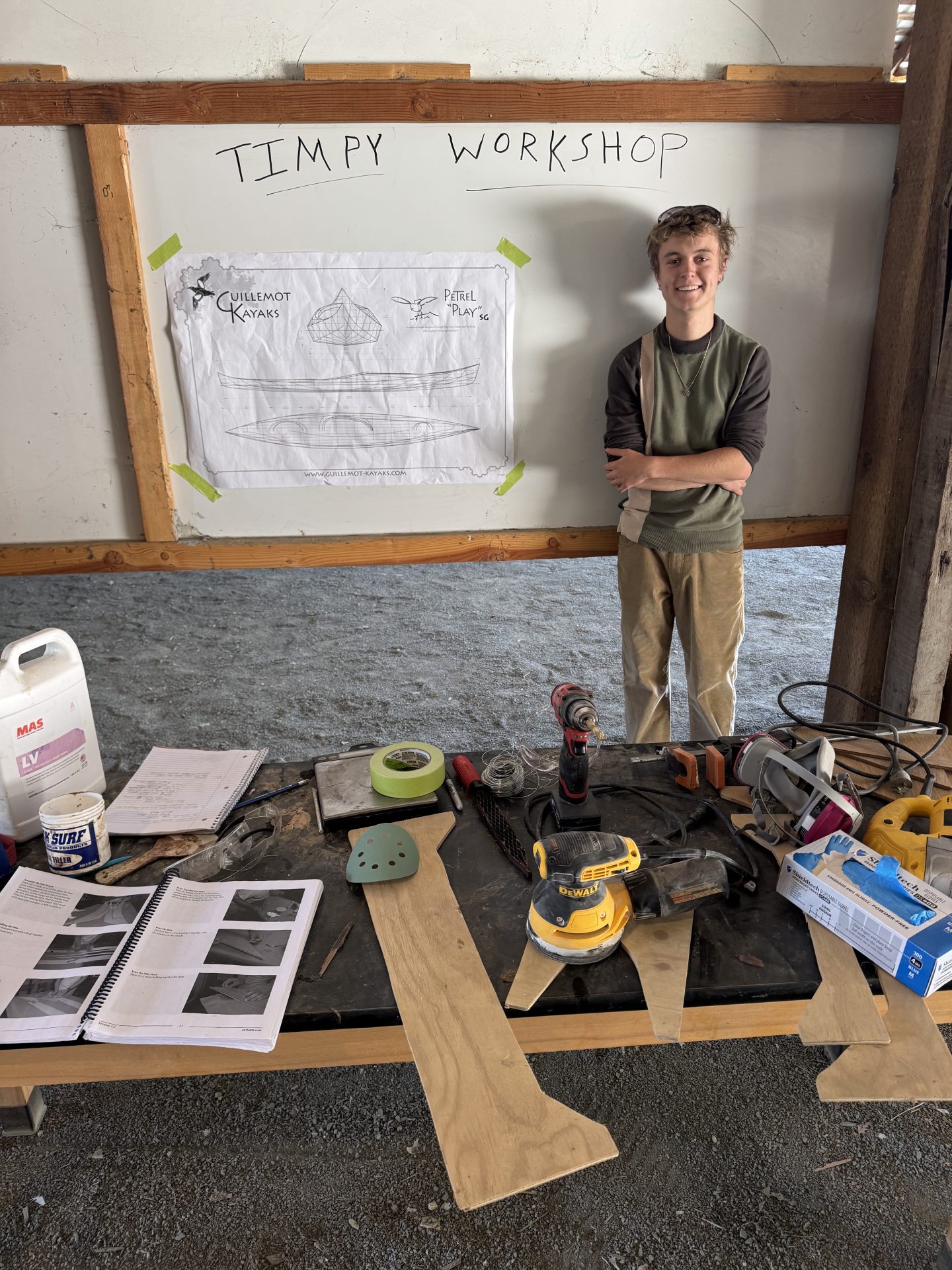
The kayak has not touched water yet. Mateo still has finishing work ahead, along with one final moment of truth: discovering whether it actually floats. “If it floats,” he says, grinning, “then I think I’ll finally feel done.” But in many ways, the real success of the project has very little to do with the kayak itself.
For Mateo, the experience became something closer to a reflection on work, growth, and the process of becoming. “Senior project is really this opportunity to prove to yourself that you can accomplish something meaningful,” he says. “And maybe also realize where you still have more to learn.”
As graduation approaches, Mateo says he will miss the mountains, the people, and perhaps most surprisingly, Midland’s phone-free culture. “It’s special always having people actually talking to each other face to face,” he says.
And when asked what he would tell a prospective student considering Midland, his answer comes quickly. “Midland is going to push you,” he says. “It’s going to teach you things about yourself, about other people, and about what it means to be a human being.”
Then, after a pause, he adds: “And I think that’s the most important part of education.”
Written by Jasmine Fullman, Admissions Associate