
Contact Information
-
MAILING : P.O. Box 8, Los Olivos, CA 93441
How Austin ’28 turned curiosity into stewardship, responsibility, and a living ecosystem at Midland
Spring 2026
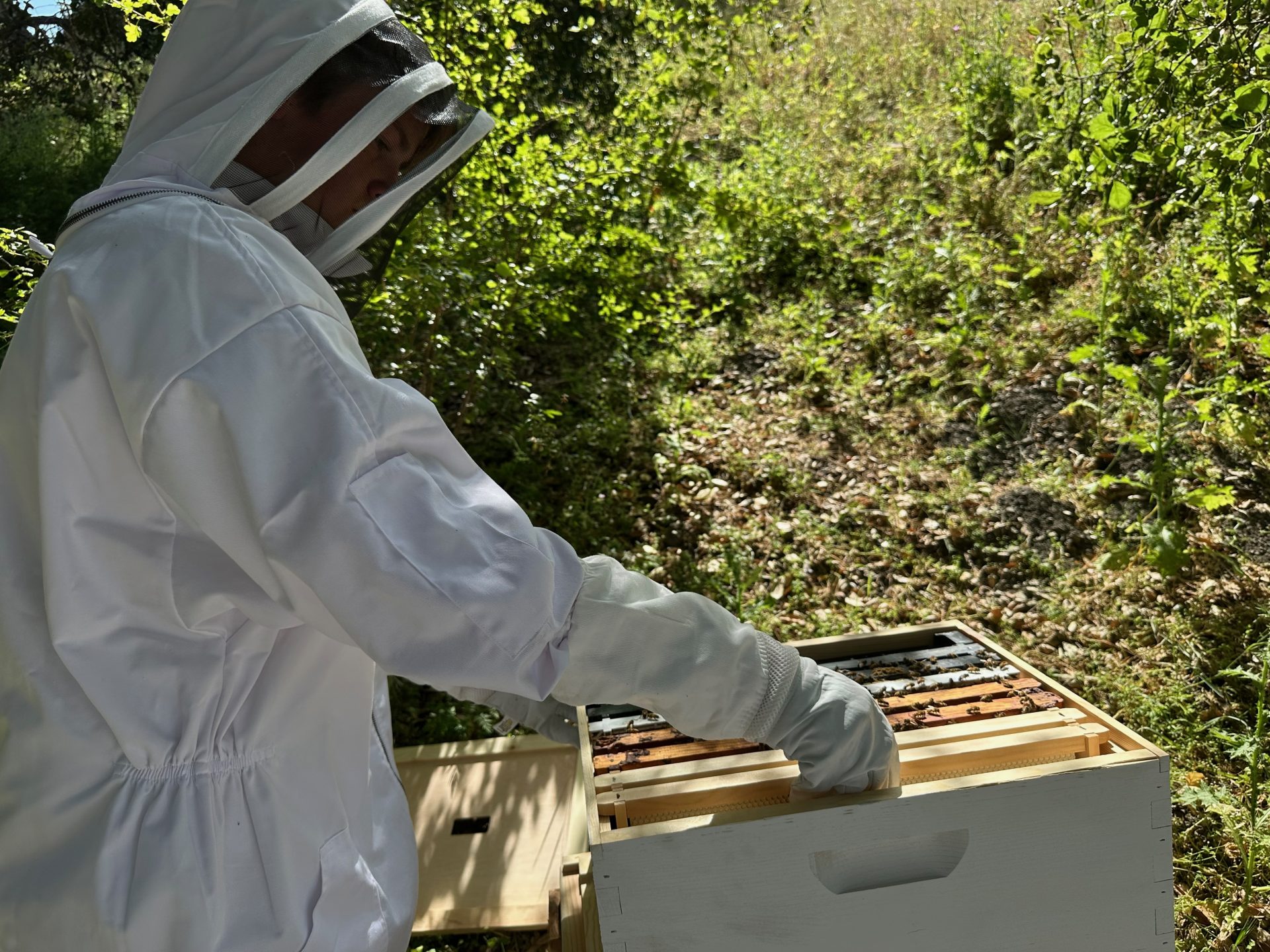
On a quiet hillside in Trash Canyon, beyond the daily movement of campus life, roughly 20,000 bees are hard at work. They move steadily through wild mustard and spring flowers, pollinating the landscape surrounding Midland while sophomore Austin ’28 carefully monitors the health of the hive they now call home.
 Years ago, during the pandemic, Austin visited a family friend who kept bees and helped harvest honey for the first time. He remembers being fascinated not only by the honey itself, but by the complexity of the hive and the way thousands of bees somehow functioned together as a single living system. “Something about it just stuck with me,” Austin says. “I kept thinking about it.”
That curiosity quietly followed him to Midland. When Austin learned there had once been a small beekeeping effort on campus, the idea resurfaced. Conversations with faculty, mentors, and his family slowly evolved into something much more real.
A few months ago, Austin and his dad drove to Santa Barbara to pick up approximately 20,000 bees and transport them back to Midland. “That was definitely the moment where it started feeling real,” Austin says, laughing. “There were bees flying around the car, and we were all a little stressed.”
But the deeper realization came later. After placing the hive on a hillside overlooking campus, Austin found himself unexpectedly anxious during the first few days. “I kept wondering if they were okay,” he says. “Would they stay? Would they survive? That was the moment where I realized I suddenly felt responsible for them.”
Since then, caring for the hive has quietly become part of Austin’s daily life at Midland. During free blocks and half holidays, he hikes out to check on the bees, observe activity levels, monitor hive health, and continue learning through direct experience.
And the bees are thriving. Only a few months into the project, the hive is already producing a surprising amount of honey thanks in part to Midland’s landscape itself. “There’s wild mustard and flowers everywhere right now,” Austin says. “The bees have access to so much natural food.”
The honey harvest has become one of the most rewarding parts of the process. “There’s something really different about honey directly from the hive,” he says. “It tastes completely different from what you buy in stores.”
The longer he works with the hive, the more his relationship with the natural world has changed. He notices flowers differently now. He pays attention to pollinators. He thinks more deeply about ecosystems, agriculture, and environmental balance. Even his fear of bees has transformed into something closer to respect.
“I used to dislike bees because I got stung a lot growing up,” Austin says. “Now I actually feel empathetic toward them.” That shift reflects something many Midland students describe after spending meaningful time learning directly from the land itself.
At Midland, education often extends beyond classrooms and into gardens, trails, barns, workshops, kitchens, wilderness trips, and student-led projects that ask students to care for something real. For Austin, the bees have quietly become teachers themselves. “They’ve taught me patience,” he says. “You can’t rush anything with them. You have to slow down and observe.”
The project has also changed the way he thinks about community. “It’s 20,000 bees all working together,” Austin says. “And somehow they all know what they’re supposed to do. It’s honestly kind of inspiring.” That observation feels fitting at Midland, where students themselves learn to live closely in community through shared work, responsibility, accountability, and collaboration.
Austin believes the project could only exist in a place like Midland. “You couldn’t really do this at most high schools,” he says. “There’s not enough land or freedom for something like this.”
The ability for a sophomore student to independently steward living hives reflects something deeper about Midland’s educational philosophy: students are trusted to pursue meaningful work connected to genuine curiosity and responsibility.
Rather than simply completing assignments, students are often invited to build, explore, experiment, revise, and care for projects that evolve over time. One question leads naturally into another. “I think because I care about it, I keep wanting to learn more,” Austin says.
Looking ahead, Austin hopes the project continues long after he graduates. He would love to expand the hives, involve more students, and eventually help establish a larger student-led beekeeping program on campus.
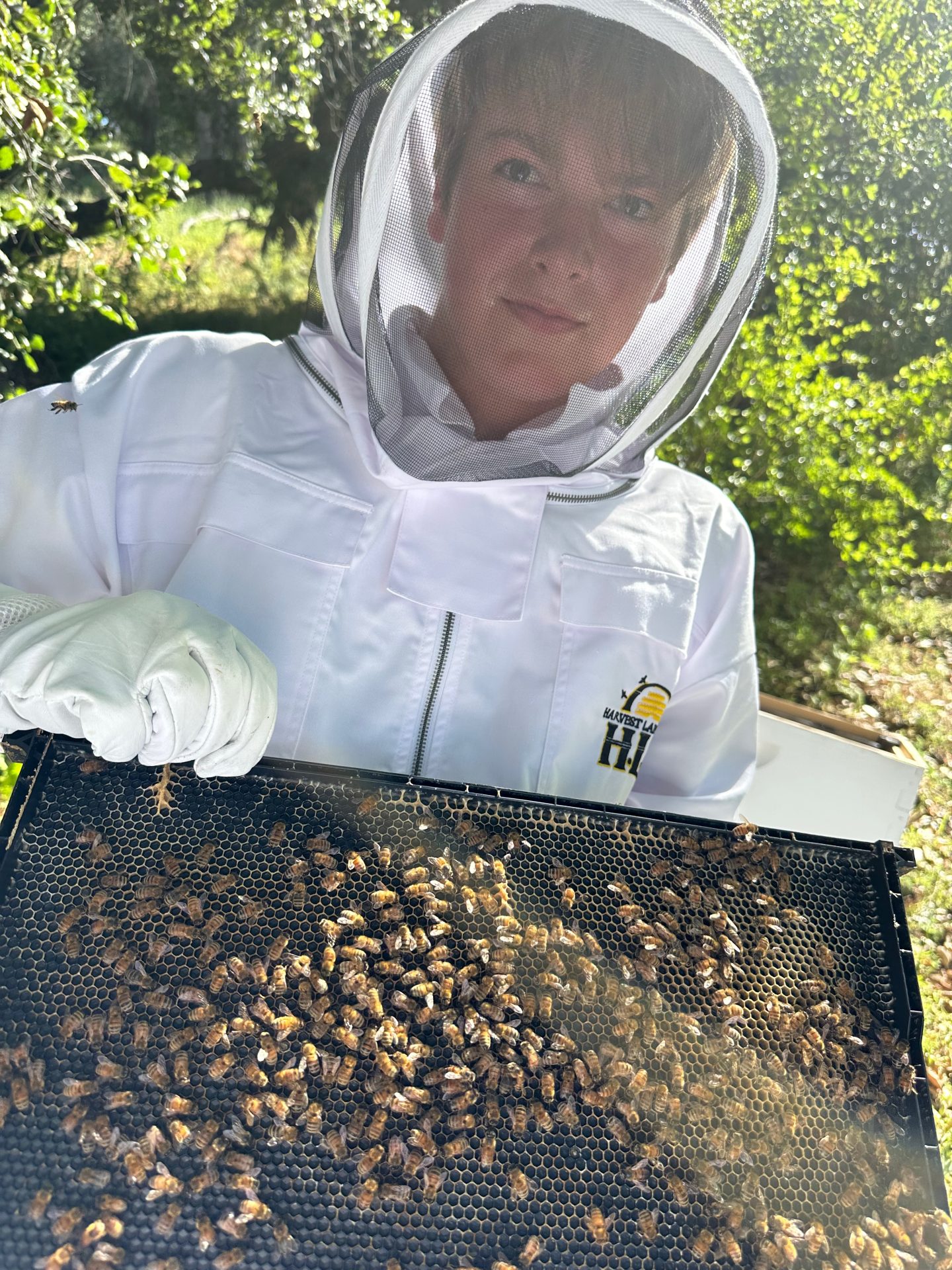
Austin showing his healthy honeycomb
For now, he remains focused on the quieter rhythms of daily stewardship: checking the hive, watching the bees move through the hillsides, and learning to pay attention.
As our conversation ends at the Squibb tables, a bee circles briefly overhead before disappearing into the surrounding trees. Austin notices immediately.
A year ago, he says, he probably would not have thought much about it.
Now he watches carefully. And somewhere deep in Trash Canyon, 20,000 bees continue building something together.
Written by Jasmine Fullman, Admissions Associate