


Contact Information
-
MAILING : P.O. Box 8, Los Olivos, CA 93441
Fall 2026
When Emma Rosa Duncan graduated from Midland in 2008, her roommate and dear friend Katie Cromack wrote a tribute in the Midland Mirror that now feels remarkably prophetic. Katie described Emma as someone who simply couldn’t stop creating. She somehow balanced honors classes with choir, athletics, leadership roles, and nine theatrical productions, all while filling the margins of her notebooks with poetry, directing extra productions for fun, and dreaming up ideas like Pirate Friday.
Katie predicted that Emma’s passion for theater would someday carry her far beyond Midland’s hills.
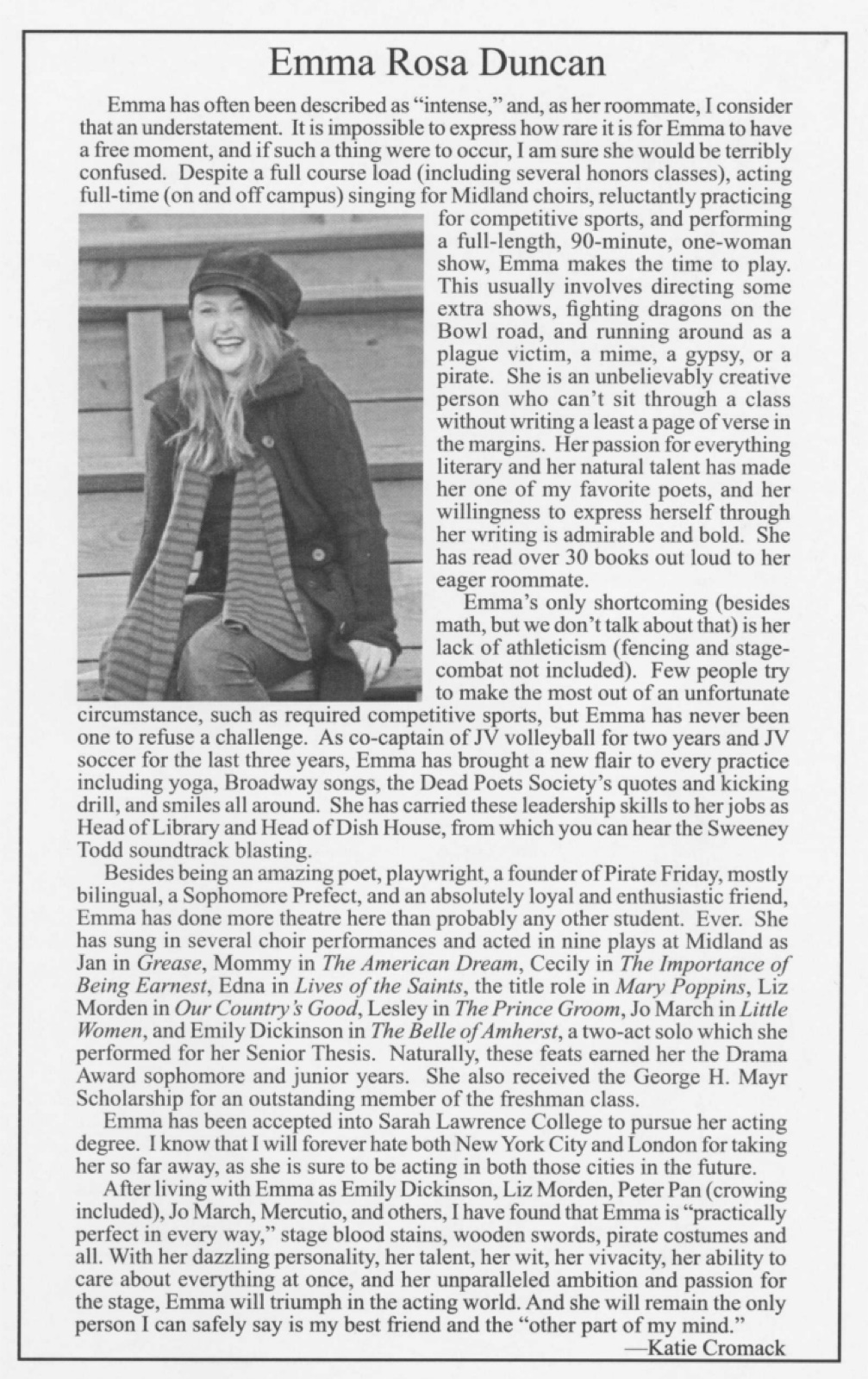
Katie Cromack’s tribute to Emma in the 2008 Midland Mirror.
Nearly twenty years later, it’s hard not to smile. Katie was right about almost everything. The only thing she missed was the role Emma would eventually play. She imagined Emma as an actor. Emma became the director.
Today, Emma, now Emma Rosa Went ’08, is directing acclaimed new work in New York City. Her recent production of Initiative, written by her wife and longtime creative collaborator Else Went, completed an award-winning run at The Public Theater, earning notable recognition from The New York Times, The Guardian, and Vulture, as well as the Drama Desk Awards.
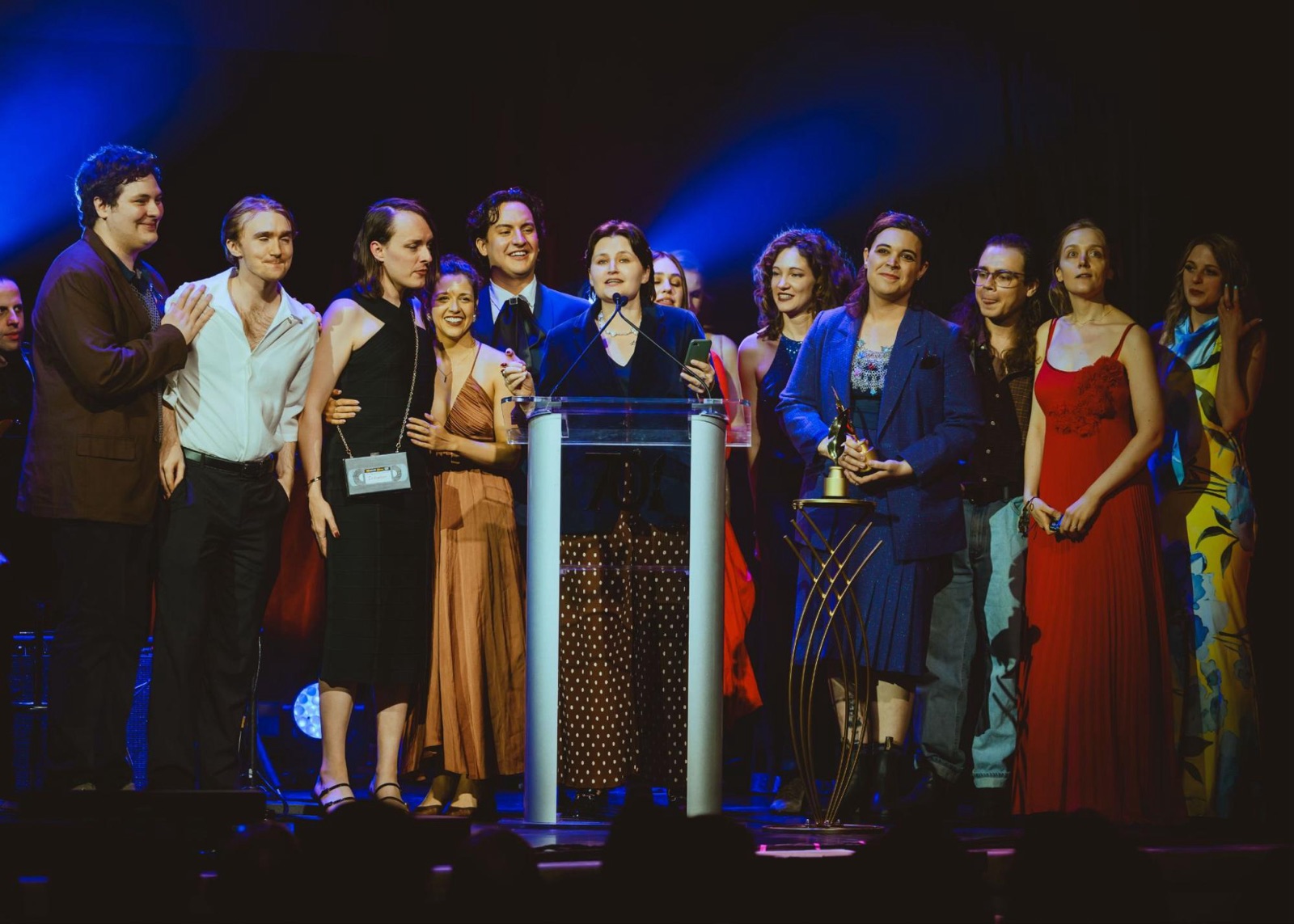
On stage at an awards ceremony.
And this fall, Emma is back Off-Broadway with another world premiere. She is directing Degenerates, written by Else, at Playwrights Horizons. The production began performances September 16, bringing another of their longtime collaborations to the New York stage. Read the Playbill announcement.
Those accomplishments are extraordinary, but as we settled into conversation, it quickly became clear they weren’t what Emma was most interested in talking about. Again and again, she found herself returning to Midland and to the lessons she first learned here, just off Fig Mountain Road.
One thought surfaced almost immediately. “We learned to make a lot with very little.”
As Emma reflected on her years at Midland, it became clear she wasn’t talking only about theater. She was talking about a mindset. Midland productions certainly weren’t built around elaborate sets or impressive technical resources. Students worked with what they had, solved problems together, and transformed the amphitheater into a place where stories came to life beneath the stars. Looking back, Emma believes those limitations became one of the greatest gifts of her education because they taught students to focus on imagination, relationships, and the story itself rather than on production value.
She laughed as she remembered performing Little Women in the amphitheater during Thanksgiving Weekend. Jo March’s attic was little more than a simple platform reached by a wooden staircase, complete with a real wood-burning stove sending smoke into the cool evening air. “I can’t believe we did that,” she said with a smile. But she also can’t imagine learning theater any other way.
That lesson stayed with her long after graduation. When Emma arrived at Sarah Lawrence College, she met students who had come from schools with remarkable theater programs and impressive facilities. Their productions were beautiful, she recalled, but she realized Midland had quietly taught her something different.
“Our work was about the humans,” she said. “Not the production value.” It’s a philosophy that still guides her work today.
When I asked what she loves most about directing, her answer surprised me. It wasn’t opening night. It wasn’t glowing reviews or sold-out audiences. Instead, she described the first moments of rehearsal, when a group of artists gathers around an idea that doesn’t yet exist.
“At the beginning of the day there’s nothing,” she said. “By the end of the day there’s something. I think that’s amazing.”
Listening to her describe that process, I couldn’t help but think about how familiar it sounded. Whether students are repairing a trail, preparing dinner, caring for livestock, building something in the shop, or rehearsing a play, so much of life at Midland begins the same way. A group of people comes together with limited resources, shared responsibility, and the willingness to solve problems creatively. By the end of the day, something meaningful exists that wasn’t there before.
Perhaps that is why Emma’s approach to directing feels so unmistakably Midland.
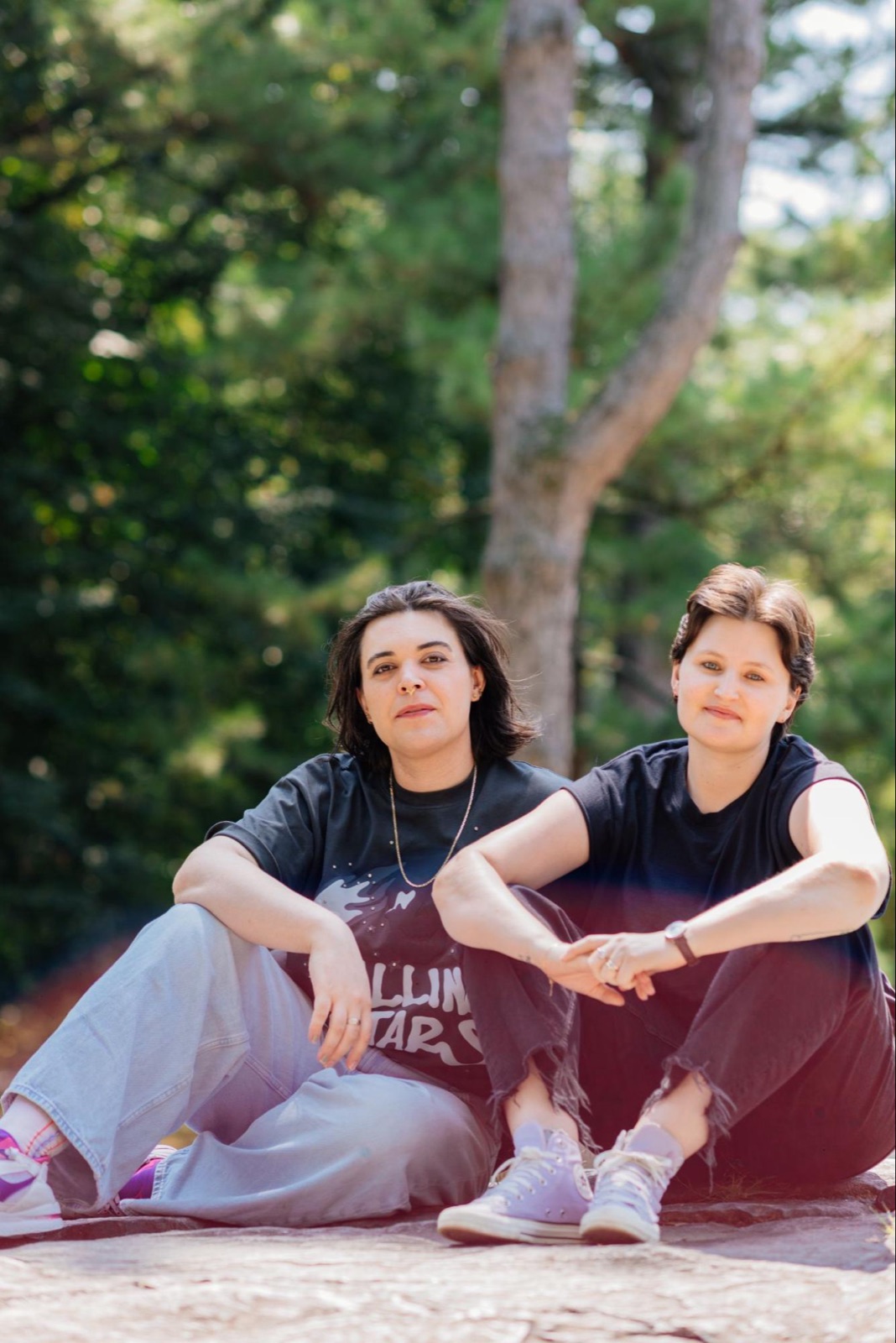
Emma with her wife and longtime collaborator, playwright Else Went.
Throughout our conversation, she returned again and again to the importance of collaboration. She and Else have been building theater together for more than a decade, and many of the actors and artists she works with have remained creative partners for years. Those relationships, she explained, have become just as important as the work itself.
“I’ve learned that collaboration benefits from long nurturing,” she said. “The people you know and trust aren’t replaceable.”
A few moments later, she offered a sentence that has stayed with me ever since. “It’s not just about making a product. It’s about being in a life with people.”
In many ways, that may be the simplest description of a Midland education I’ve ever heard.
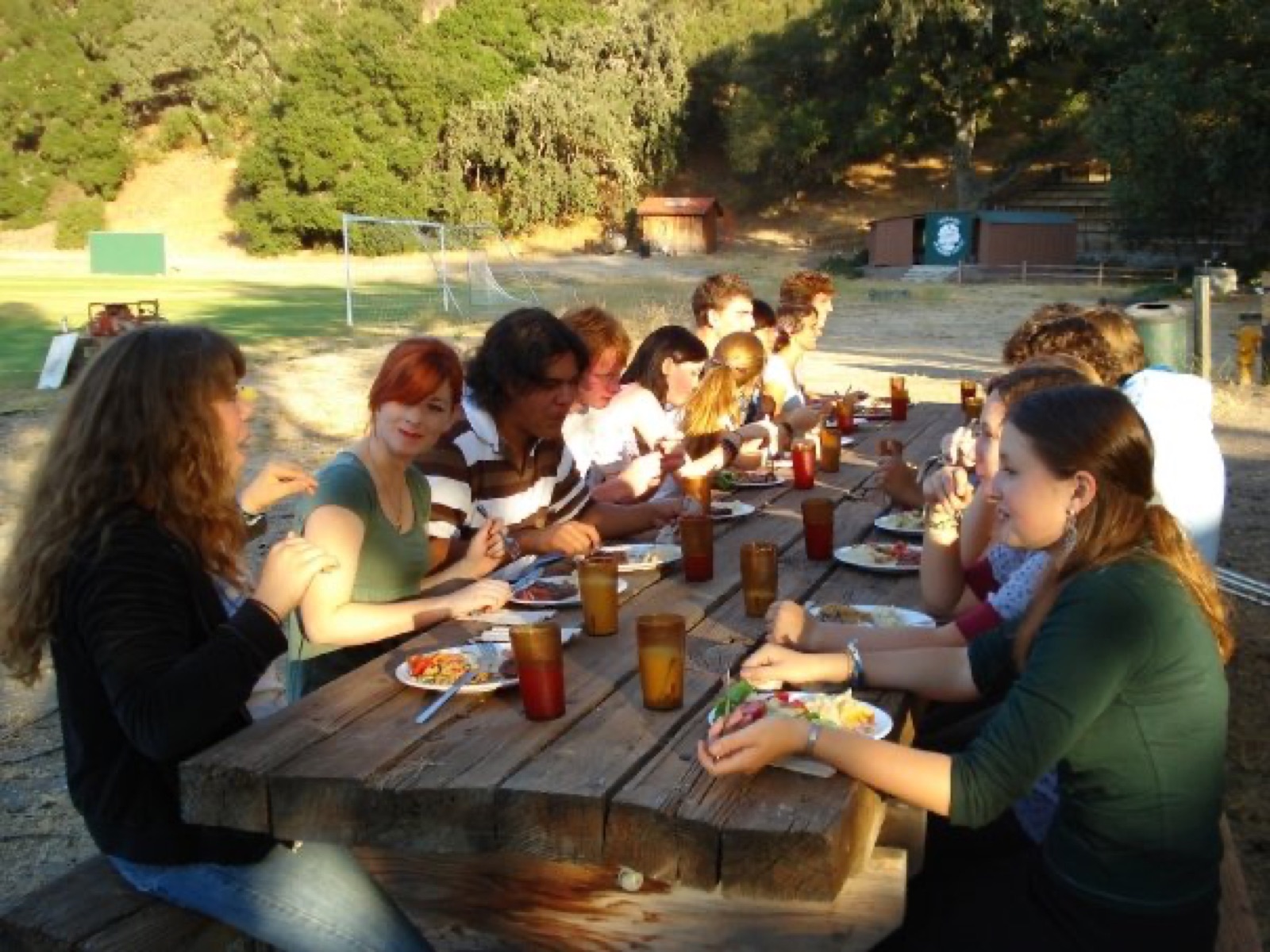
Sharing a meal at Midland.
Students don’t simply share classrooms here. They share meals, Jobs, performances, athletic fields, dorms, and countless ordinary moments that quietly teach them how to rely on one another. They learn that meaningful work is rarely accomplished alone, and that the strongest communities are built slowly, through trust and shared responsibility. Those lessons continue long after graduation.
One of the people who helped shape Emma’s own journey was longtime theater director Ian Cummings. “He was the first adult who really took me seriously as an artist,” she reflected.
Years later, Ian and Lynda Cummings traveled to New York to see Initiative, a full-circle moment that meant more to Emma than any review ever could. Today, Emma finds herself mentoring Ian’s daughter Emily as she begins her own career in theater, a reminder that the Midland community has always been one where one generation quietly encourages the next.
As our conversation drew to a close, I asked Emma what she hopes today’s Midland students carry with them long after graduation. Her answer had nothing to do with theater. Instead, she spoke about presence.
Looking back on her years on Midland’s hillside campus just off Fig Mountain Road, she reflected on growing up before smartphones shaped every interaction. She remembered long conversations with friends, afternoons that stretched into evenings because no one was in a hurry to leave, and the experience of living, working, and creating alongside people every day. “I actually think the world needs that ethos now even more than it did when I graduated,” she said. “I hope students appreciate it while they’re living it.”
This fall, Emma’s work has reached another exciting milestone. Degenerates, written by Else Went and directed by Emma, opened at Playwrights Horizons in New York in September and has been earning critical acclaim, including recognition from The New York Times. The production brings together many of the threads that have shaped Emma’s work as a director: collaboration, curiosity, and a willingness to sit with complicated human stories.
As I thought about everything Emma had shared, I found myself returning to the very first thing she said. “We learned to make a lot with very little.”
At first, I thought she was talking about theater. By the end of our conversation, I realized she was talking about something much bigger.
She was talking about a way of approaching life with imagination instead of excess, with collaboration instead of competition, and with the confidence that meaningful things can be built when people are willing to trust one another.
Nearly twenty years after leaving Midland, Emma is still doing exactly that.
Class Year: 2008 (Emma Rosa Duncan)
Current Role: Theater Director, Public Theater Directing Fellow, Shakespeare educator
Lives: New York City
Recent Work: Initiative (The Public Theater)
This Fall: Degenerates (Playwrights Horizons), world premiere September 16
Coming Next: As You Like It (The Public Theater Mobile Unit)
Curious what a Midland education could look like for your family? Plan a visit to campus.
A reflection facilitated by Senior Advancement Associate, Jasmine Fullman
Excited to learn more about the Midland Experience?